Ukraine: war, reforms and EU accession
In Ukraine, the war continues to rage on a daily basis. Peace remains distant due to ongoing Russian aggression and political uncertainty in the United States, despite sustained Ukrainian and European efforts to pursue a diplomatic resolution.
At the same time, Ukraine is fighting a second battle: strengthening and democratising its society, institutions and political system in preparation for EU accession. The European Commission has advised that Ukraine may open several clusters in the accession process. While full membership will still require many steps, it is clear that the rule of law, just governance and the development of a strong welfare state will be central to Ukraine’s future within the EU.
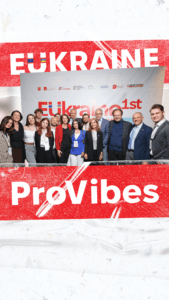
At the end of November, EFDS co-organised a major conference in Kyiv, contributing ideas for a progressive future for Ukraine. The priorities of our social democratic partners can be found here:
https://pes.eu/pes/progressives-unite-in-kyiv-to-reaffirm-solidarity-with-ukraine-and-support-a-just-peaceful-european-future/
Montenegro: EU accession and the green transition
From Ukraine to Montenegro, another country making significant progress towards EU membership. Montenegro has been a candidate country since 2010 and hopes to join the EU in the coming years. Nevertheless, major challenges remain—particularly with regard to the green transition.
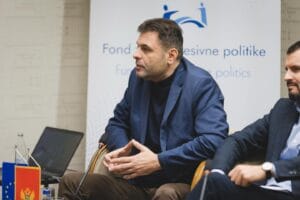
Despite favourable geographical conditions for renewable energy production, a large share of Montenegro’s energy supply is still based on fossil fuels. Together with social democratic and green partners, EFDS discussed these challenges at a conference in Podgorica. Central questions included how EU accession and the green transition can jointly become an economic opportunity, supporting sustainable growth and quality employment.
Developments in this area may accelerate in 2026. Much attention is therefore focused on the EU–Western Balkans Summit, which will take place in Montenegro in June. More information on the conference can be found here:
https://www.cdm.me/drustvo/fond-za-progresivne-politike-fokus-usmjeren-na-pravednu-zelenu-tranziciju/
The Western Balkans: moving beyond ‘EU fatigue’
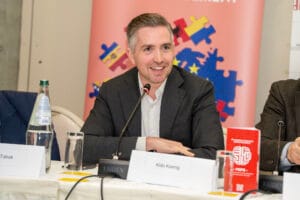
The EU–Western Balkans Summit will also bring together the other candidate countries of the region: Bosnia and Herzegovina, North Macedonia, Albania, Serbia and Kosovo—together with Montenegro often referred to as the “Western Balkans Six”. All seek EU membership, yet face diverse challenges related to economic development, geopolitics and political stability.
A recurring issue across the region is EU fatigue. Many citizens have repeatedly been told that accession is close, only to see the process delayed or blocked. It is essential for the EU to reverse this narrative. Without the Western Balkans, the European Union is incomplete.
This requires not only reforms in candidate countries—important as they are—but also reflection within the EU itself. What should a strong European Union look like in 2040? And how do we prepare our institutions for further enlargement? In 2026, EFDS will continue to work with partners to develop proposals addressing these questions. While autocrats seek to undermine the EU and conservatives aim to preserve the status quo, EFDS advocates change and innovation within European institutions.
See also our joint statement from December 2025:
https://feps-europe.eu/news/friends-of-the-western-balkans-joint-statement/
and this recent publication on the EU’s Multiannual Financial Framework:
https://feps-europe.eu/publication/financing-enlargement-via-the-2028-2034-mff/
Armenia: a European trajectory under pressure
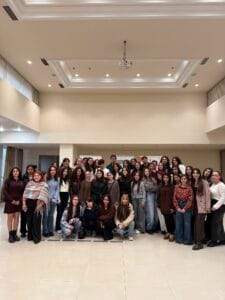
European rapprochement is also increasingly visible in Armenia. Following the ethnic cleansing of Armenians in Nagorno-Karabakh by Azerbaijan, it has become clear in Yerevan that Russia’s security guarantees offer little real protection. As a result, Armenia finds itself increasingly isolated and is seeking closer ties with European partners, both in terms of security and economic cooperation.
Crucial elections are scheduled for 2026. Prime Minister Pashinyan is seeking to convince voters of a predominantly pro-European course, while concerns persist regarding the rule of law and economic liberalisation under his Civil Contract party. In response, colleagues from the Social Democratic Platform of Armenia organised a major conference on labour rights in late 2025, together with Armenian trade unions.
For a strong and democratic Armenia, social policy is essential. EFDS will continue in 2026 to support partners who work tirelessly towards this goal.
Moldova: reform momentum at a decisive moment
Finally, Moldova. The country is accelerating its EU accession process, strengthened by successive electoral victories of the clearly pro-European PAS party and President Maia Sandu. With no major national elections scheduled for the next two years, this is a crucial window for delivering the reforms required for EU accession.
Two key challenges dominate the agenda. First, Moldova’s long-struggling economy, which has yet to recover and has not been sufficiently revitalised by liberalisation policies. Second, the role of Transnistria, the Russian-backed breakaway region on the eastern bank of the Dniester River. Transnistria is now more dependent than ever on trade with the EU, and deeper integration with Moldova appears to be in the interest of all parties—except the Kremlin.
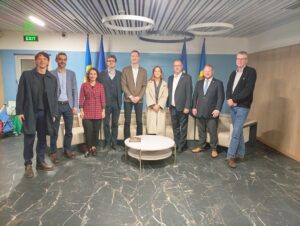
EFDS visited Moldova in October 2025 to engage with progressive partners, who stressed the importance of political pluralism and the development of pro-European alternatives that are also critical of the current economic policies. Supporting these efforts will remain a priority for EFDS in 2026, with the aim of contributing to a strong, democratic Moldova within the EU.
For further analysis of Moldova’s polarised political landscape, we recommend this article by Dorina Baltag and Amy Eaglestone:
https://www.tandfonline.com/doi/abs/10.1080/09662839.2025.2583337